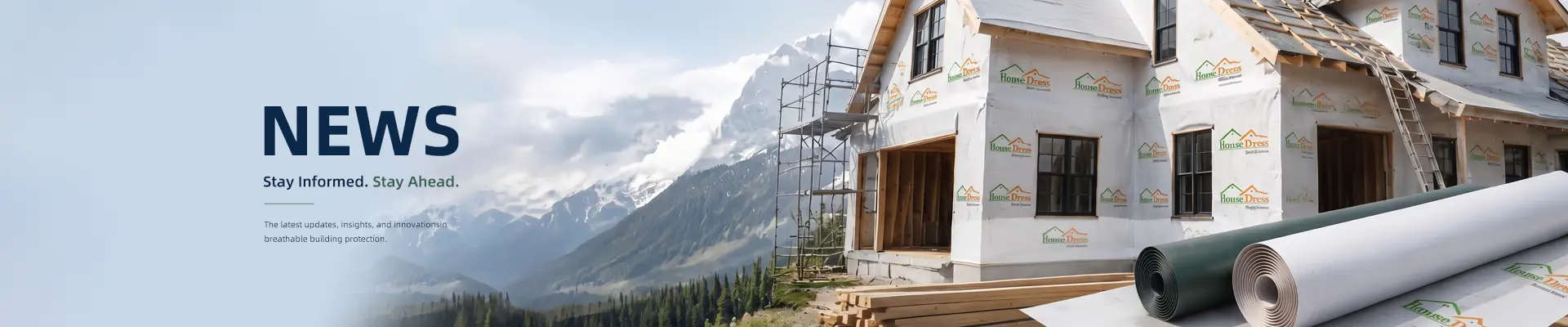
Waterproof Breathable Membrane - "Breathing Protective Suit" For Modern Building Envelopes
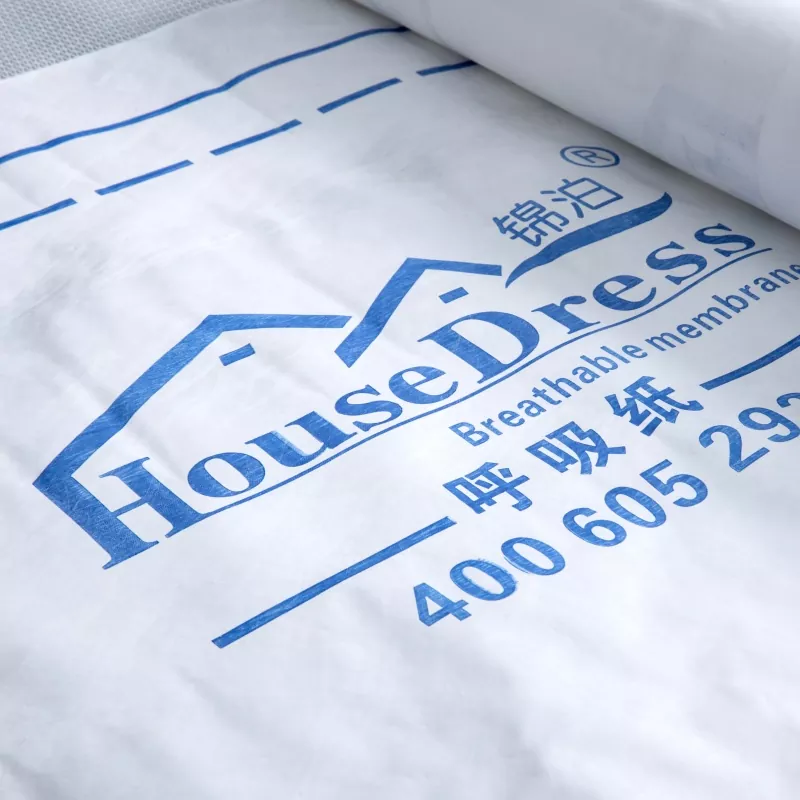
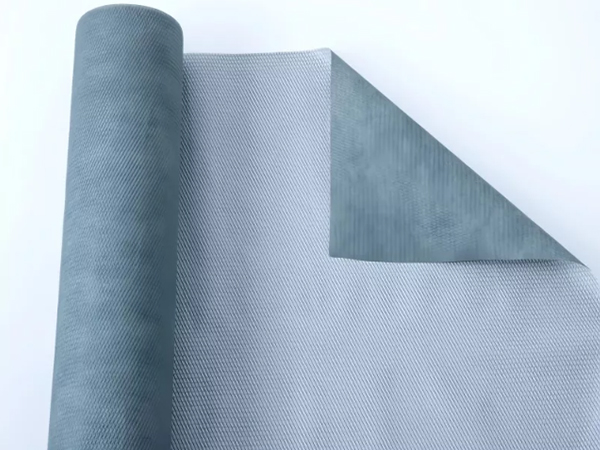
The waterproof breathable membrane is a functional non-woven building material fabricated by composite processing of polymer materials such as spunbond polypropylene. When applied on the outer side of the insulation layer, it serves as a protective barrier for the building envelope.
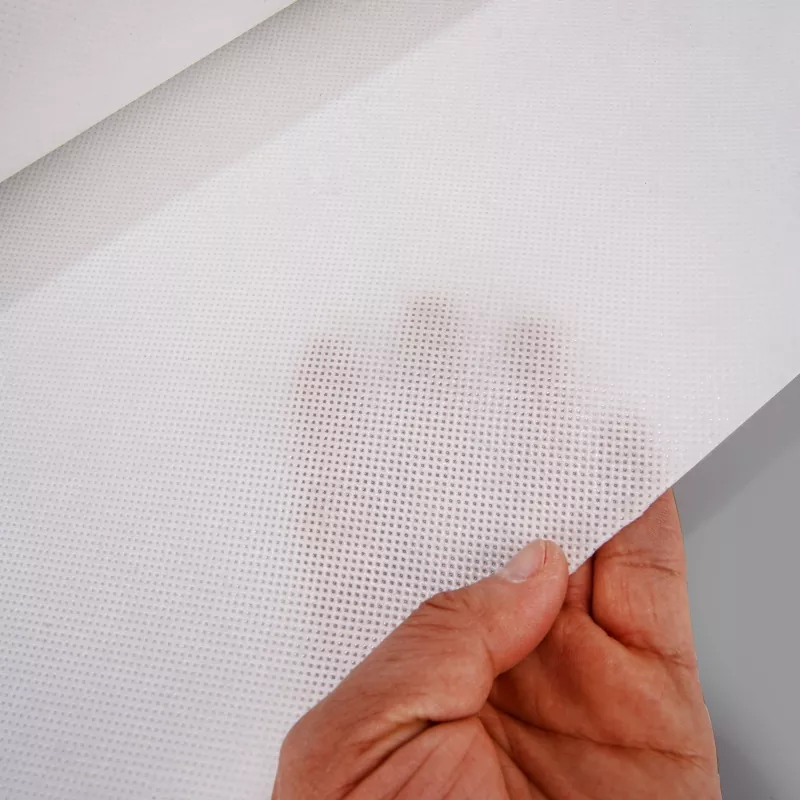
It achieves differentiated permeability through the principle of microporous physics: liquid water droplets, with a diameter of approximately 20 μm, cannot penetrate the film due to surface tension; in contrast, water vapor molecules, measuring only about 0.0004 μm, can diffuse outward through the micropores within the film.
In summary, its core characteristics are: blocking liquid water while allowing water vapor to pass through, thereby balancing water resistance with vapor permeability, while also providing excellent airtightness.
Unlike conventional PE plastic films or asphalt roofing membranes, traditional waterproofing materials trap water vapor inside the wall. This can easily lead to moisture damage to the insulation layer, mold growth on the walls, or corrosion and aging of building components. The waterproof and vapor-permeable film addresses the industry-wide challenge of "waterproofing without vapor discharge" and is aptly described as the "breathing building exterior."

Four Core Functions
1.Improve building airtightness and reduce HVAC energy consumption
A waterproof, breathable membrane is applied to the exterior of the insulation layer to reduce air infiltration and convective heat loss, as well as to minimize uncontrolled exchange of hot and cold air. According to relevant research data from the U.S. National Institute of Standards and Technology (NIST), buildings equipped with a hermetic envelope system can achieve energy savings of up to approximately 40% on heating and cooling costs. Excellent airtightness serves as a fundamental requirement for meeting energy efficiency targets in passive houses and low-energy buildings.
2.Reliable watertight protection against rainwater ingress
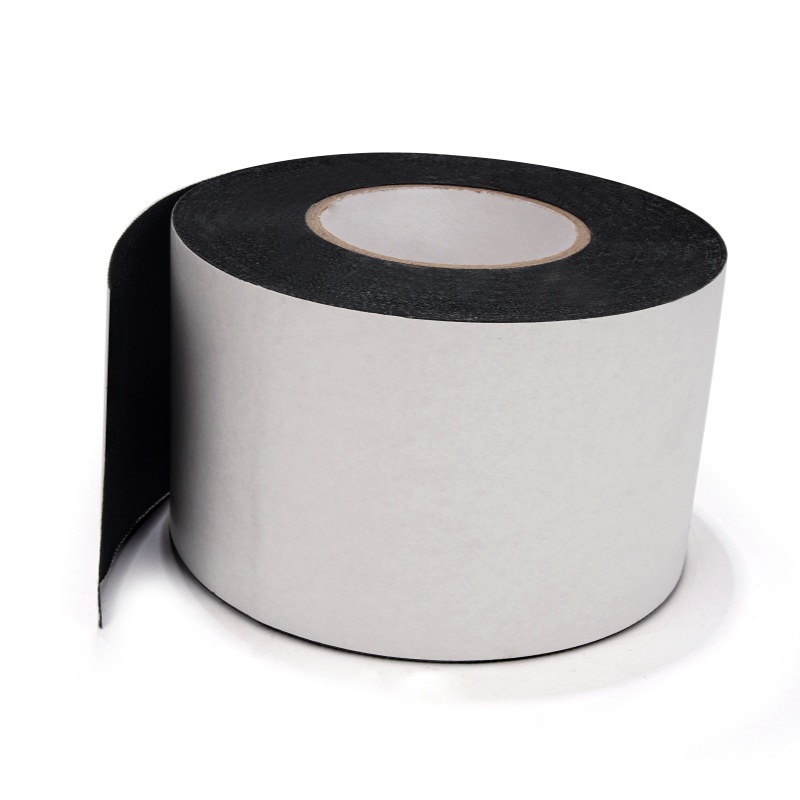
During the construction phase and throughout the entire building lifecycle, the membrane material protects walls and insulation layers against rainwater and outdoor moisture infiltration. When combined with sealing tape and butyl overlap auxiliary materials, it forms a continuous, intact watertight barrier that safeguards the insulation materials against rainwater washout and saturation, thereby ensuring that the insulation layer's original thermal performance remains intact.
3.Continuous air circulation and moisture removal to prevent condensation and mold growth
Condensation vapor can form within walls and insulation layers; if it remains trapped for an extended period, it can promote mold growth, corrode building components, and reduce insulation efficiency. The water vapor transmission rate of the waterproof vapor-permeable membrane can exceed 1000 g/m²,24h, allowing the moisture within the walls to evaporate and escape, thereby maintaining the dryness of the building envelope, extending the service life of the structure, and improving indoor air quality.
4.Protect the insulation layer and optimize project costs
The waterproof and breathable membrane is applied directly over the insulation layer; under most operating conditions, no additional fine-grained concrete pouring or extra venting structure is required on the outer side of the insulation layer, thereby simplifying the construction process and effectively controlling the overall project cost.

Working Principle: Micropore Sieving Effect
Microscopic pores within the membrane deliver selective permeability:
Large liquid‑water droplets are held back by surface tension and cannot penetrate the material;
Tiny gaseous water vapour molecules pass through micropores via diffusion.
⚠️ Critical note: the membrane cannot be installed backwards. For a complete moisture control system, the exterior waterproof breathable membrane must work together with an interior vapour barrier to realise the principle: vapour barrier on the inside, breathable membrane on the outside.
Key Performance Indicators for Product Selection
Do not rely solely on marketing claims. Evaluate these critical test parameters for engineering procurement:
Water vapour transmission rate: ≥ 1000 g/m²·24h recommended for efficient moisture release.
Water resistance / Water‑tightness: determines resistance against driving rain.
Tensile strength & nail shank tear resistance: prevents tearing during installation and tensioning.
Low‑temperature flexibility: no cracking at -30 °C, suitable for cold‑climate zones.
UV‑resistance & ageing performance: guarantees durability under outdoor exposure.
Operating temperature range: stable material performance between -40 °C and +80 °C.
Procurement tip: select products supported by third party test reports such as SGS or national building material test centre certification. Always check the compatibility between membrane and matching sealing accessories.
Conclusion
Waterproof breathable membrane is no longer an optional add on but an essential part of modern low energy building envelopes. It resolves the historic conflict between waterproofing and moisture‑venting via micropore physical principles.
During design phases, architects and contractors need to fully understand moisture transport logic. Proper material selection, matching accessories and high quality on site detailing are all required to realise energy saving, mould proof and long lasting building performance.
Related News
- House Dress: Nearly 20 Year Expertise In Building Envelope Membrane Solutions
- Jinbo House-Dress: How China's Enclosure Membrane Materials Meet The Diverse Architectural Needs Of Overseas Markets
- Building Envelope Sealing Tapes: Small Auxiliary Materials Can Determine The Success Or Failure Of The Entire Membrane System
- Jinbo House Dress:New Iteration Of Self-Adraping Anti-Condensation Felt Now Released
- Providing Global Customers With One-Stop Building Envelope Material Solutions
- Modern Building Envelopes—The Importance Of Water-Resistant, Breathable Membranes
Leave me a message





 Miranda
 Miranda