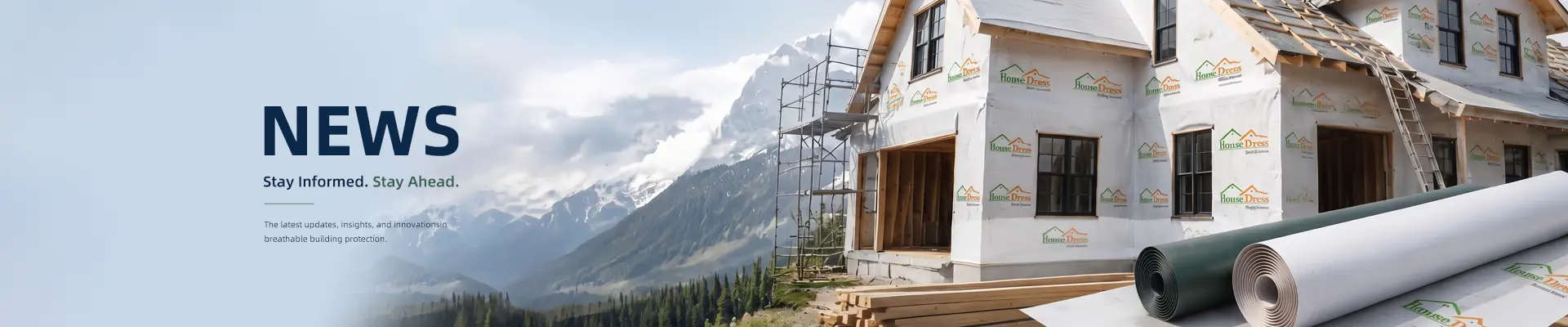
Jinbo House-Dress: How China's Enclosure Membrane Materials Meet The Diverse Architectural Needs Of Overseas Markets
The overseas green building market has well-established standards for waterproof and vapor-permeable building envelope materials. However, construction practices, climatic conditions and regulatory codes vary widely across countries and regions. Many Chinese building material exporters directly ship domestic products overseas, which often causes mismatches with local standards and unsuitable field performance.
Headquartered in Xiong’an New Area, Xia's Packing has expanded globally since 2009. Its Jinbo House-Dress product line leverages local manufacturing capacity to satisfy requirements across Europe and North America. The brand provides product adaptation, standard compliance and tailored construction solutions, helping Chinese building envelope membrane products enter international markets.
Since the 1980s, the "breathable building" envelope concept has gained wide acceptance across Europe and North America. Waterproof vapor-permeable membranes and vapor barriers have become standard materials for light-gauge steel buildings, passive houses and curtain wall projects. EN-series testing standards are widely adopted, yet operating environments differ significantly: cold and humid Northern Europe, high solar radiation and hot climates in Southern Europe, plus widespread light steel and timber construction in North America.
This leads to different local requirements for vapor transmission rate, UV resistance, mechanical strength and flame retardancy. Jinbo House-Dress’s overseas strategy follows a framework: standard alignment + customized operational solutions + matched supporting accessories, rather than only exporting membrane rolls.
1. Align with international testing standards to achieve compliance certification
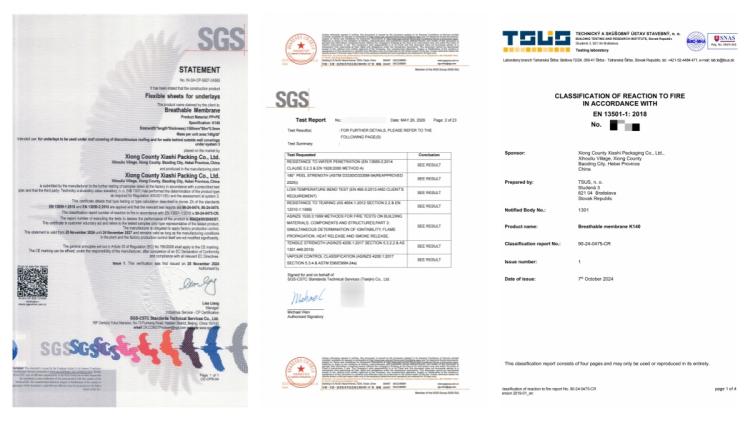
Our core waterproof and vapor-permeable membranes, vapor barriers and sealing tapes have passed European standard tests and obtained SGS third-party test reports, meeting EU market access specifications. For the North American market, we improve fastener tear resistance and crack performance to satisfy puncture test requirements for local timber and light steel construction.
2. Customize products based on overseas climate zones
Extremely cold Northern Europe: Reinforced vapor barrier membranes with tightly controlled vapor transmission rates, paired with low-temperature resistant butyl sealing auxiliary materials, to handle large indoor-outdoor temperature gaps through long winters.
Southern Europe & Mediterranean regions with strong solar radiation: UV-resistant waterproof vapor-permeable membranes are selected to resist UV aging and maintain service life under prolonged strong sunlight.
High-humidity coastal overseas projects: Full corrosion-resistant substrate packages, including salt-spray resistant butyl tape, slow down material degradation from coastal salt spray exposure.
3. Supply primary and auxiliary materials together, plus localized construction guidance
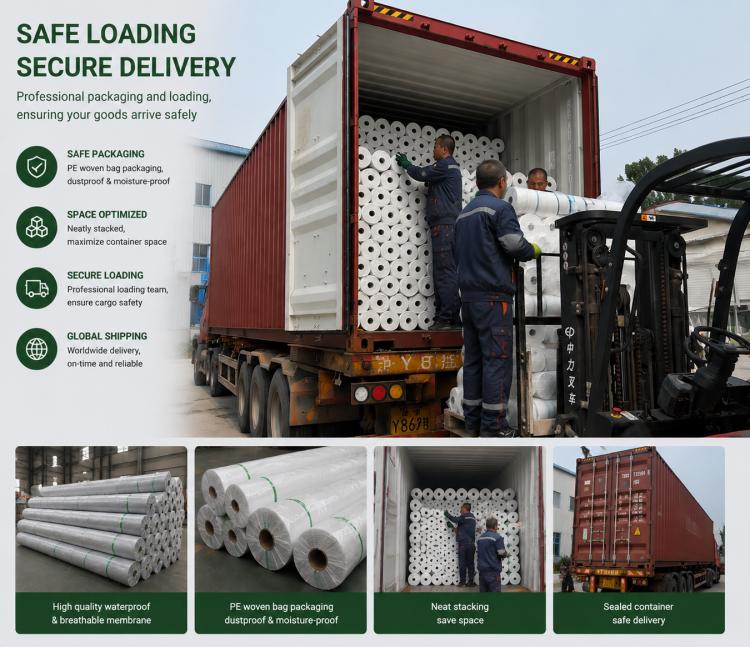
Overseas construction projects value system integrity. Many Chinese manufacturers only supply membrane rolls, leaving customers to source sealing tapes and flashing locally. This often causes performance mismatch between main and auxiliary materials and triggers whole-system failure.
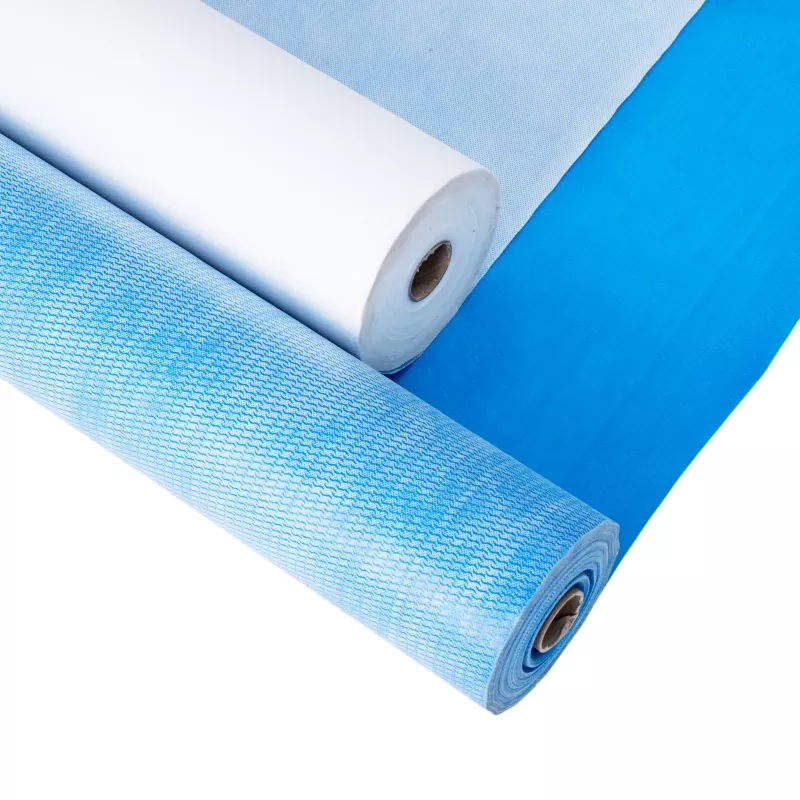
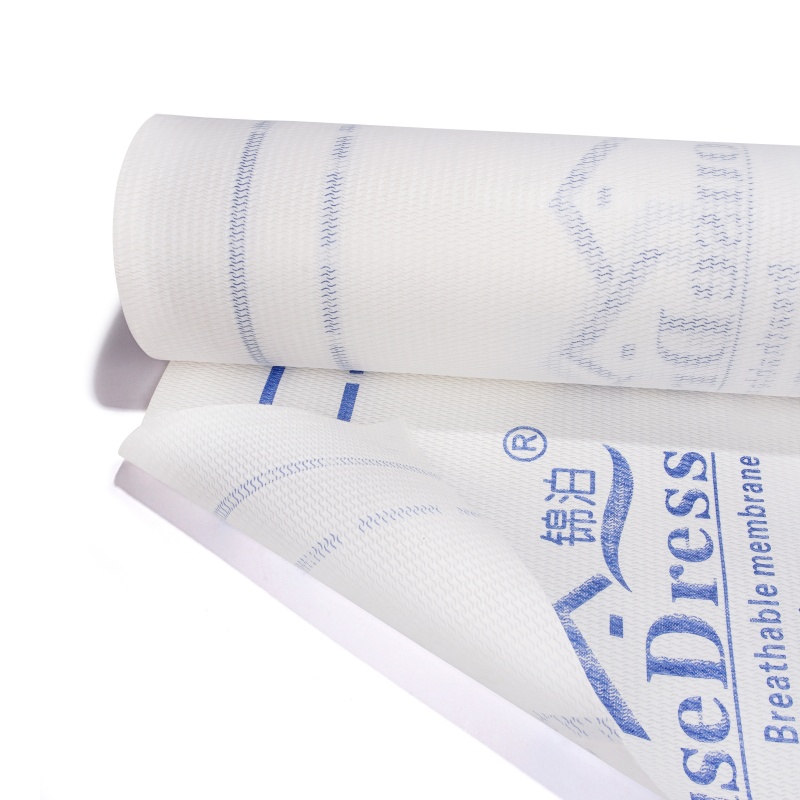
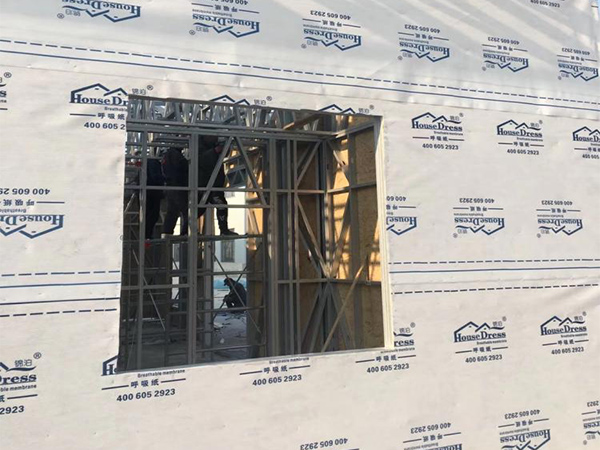
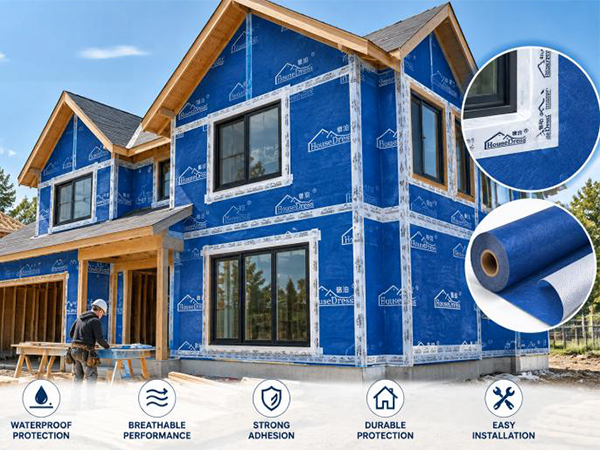
Jinbo provides customers with a complete package: waterproof vapor-permeable membranes, vapor barriers, anti-condensation felts, vapor-permeable & vapor-barrier window tapes, butyl flashing and matching fastening hardware. We also supply English construction drawings, covering cold/hot side installation rules, overlap width and window opening detailing.
This helps overseas distributors and general contractors fully understand vapor control system installation logic, instead of receiving merely a roll of material.
“Going global is not about exporting domestic products as-is. Each region comes with unique standards, climates and construction practices. Our goal is to understand local building logic, tailor products and supporting solutions accordingly, and ensure Chinese-made building envelope systems fit local project requirements,” stated the head of overseas operations at Xia's Packing.
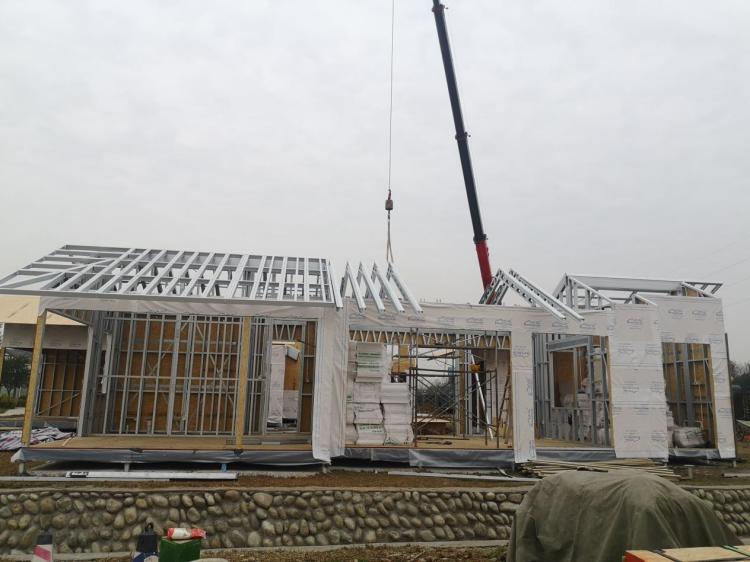
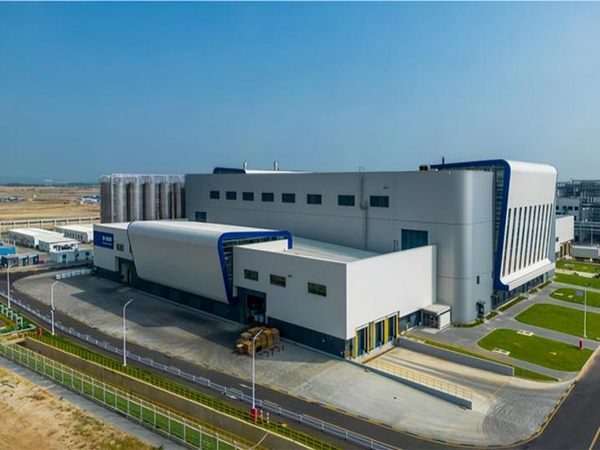
With in-house polypropylene polymer production capability, Jinbo offers standard stock products and supports formulation & specification customization for large international buyers. Its products have been used widely across European and North American markets, and also applied in domestic landmark projects in China, including the BASF Zhanjiang facility, Starbucks Innovation Industrial Park and Danzhou Sports Center, delivering validation in both domestic and global markets.
According to NIST research, fully sealed continuous building envelope systems may cut HVAC energy consumption by up to 40%.
Conclusion
Chinese building material exporters cannot rely solely on price competitiveness to succeed in overseas markets. Standard compliance, climate suitability and complete system integration are critical to sustaining long-term international presence.
Jinbo House-Dress has evolved from standalone membrane supplier to a full building envelope solution provider. The brand aligns with international standards, adapts products to local climate and building characteristics, and delivers on-site construction technical support.
Amid the global green building trend, Chinese building envelope manufacturers should leverage supply chain strengths while accumulating material application expertise. Exporting mature, complete vapor control system solutions will further improve the global competitiveness of China’s building envelope materials.
Related News
- House Dress: Nearly 20 Year Expertise In Building Envelope Membrane Solutions
- Building Envelope Sealing Tapes: Small Auxiliary Materials Can Determine The Success Or Failure Of The Entire Membrane System
- Jinbo House Dress:New Iteration Of Self-Adraping Anti-Condensation Felt Now Released
- Providing Global Customers With One-Stop Building Envelope Material Solutions
- Modern Building Envelopes—The Importance Of Water-Resistant, Breathable Membranes
- Smart Microporous Filtration: Blocking Rain, Venting Moisture
Leave me a message




 Miranda
 Miranda